DAMIEN HIRST
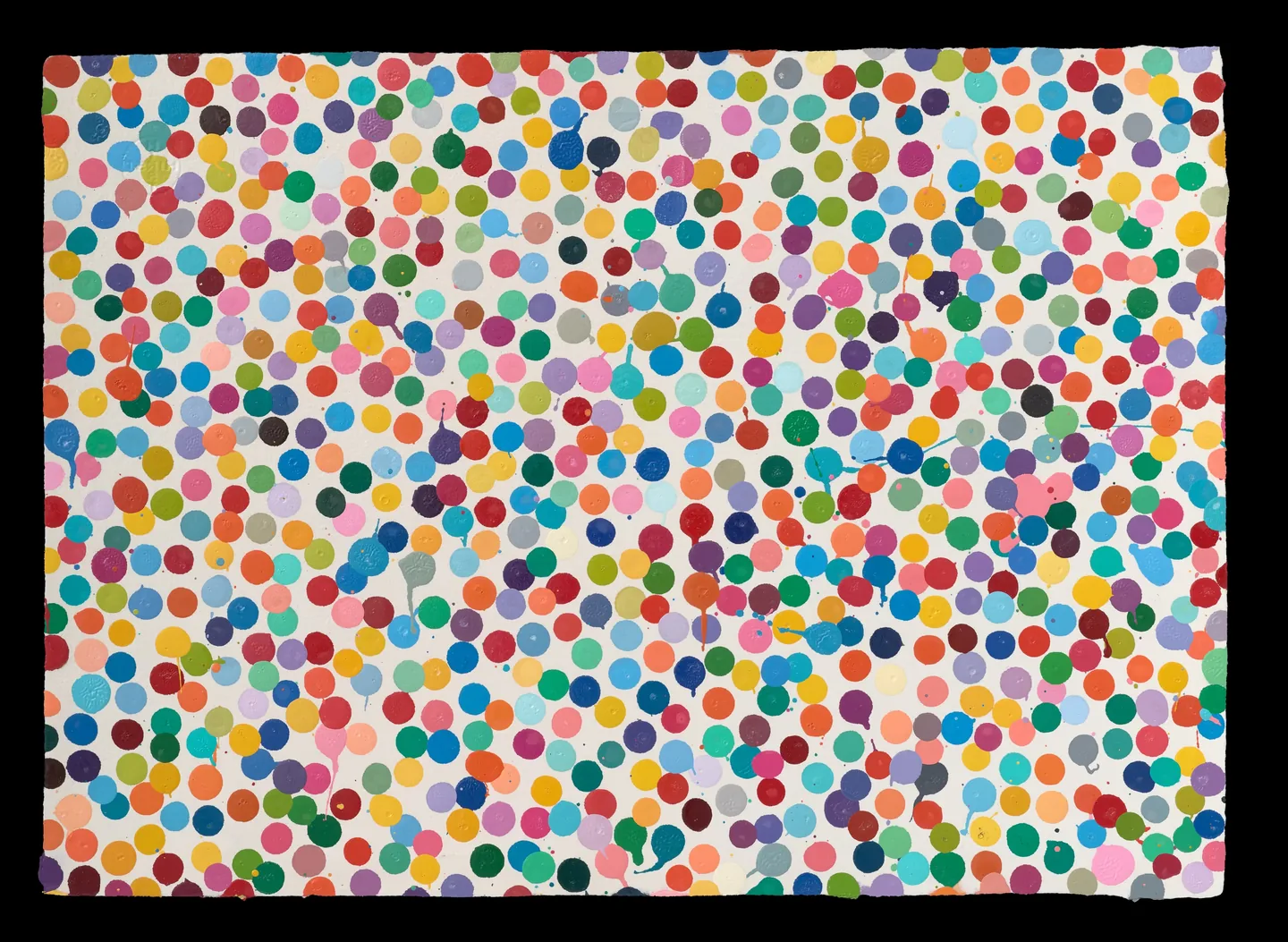
conceptual, painting · PALM + Ethereum · x.com/hirst_officialIn 2021, Hirst made 10,000 hand-painted spot works and gave collectors a single choice: keep the NFT, or burn it for the physical painting. 5,149 chose the painting. 4,851 chose to stay digital. The question was the artwork.
—
The Currency, total minted
10,000
The Currency, digital survivors
4,851
The Beautiful Paintings, works
399
The Beautiful Paintings, floor
6.9 Ξ
The Beautiful Paintings, volume
20.16 Ξ
On-chain since
2021
Supply and burn/keep split for The Currency (10,000; 4,851 digital / 5,149 physical) are published facts from HENI, as of the July 2022 burn deadline. The Currency is on PALM and not reliably indexed by OpenSea — no floor or volume from this source. The Beautiful Paintings reads from OpenSea (Ethereum, contract 0x6b893a18b60e7ad13e9e9e77e4b4c58ad23b6e17): floor 6.9 Ξ, 20.16 Ξ all-time volume, 37 sales, 331 owners — read 2026-08-22.
Track Damien Hirst in Alfred
The Beautiful Paintings floor and sales, live — The Currency awaits OpenSea PALM indexing.